


Essential Tips for Taking Care of your Teeth During Orthodontic Treatment
It’s important to take extra care of your teeth while undergoing orthodontic treatment. Brushing and flossing regularly are essential to maintaining the health of your teeth and gums, ensuring that your orthodontic treatment leads to a beautiful, healthy smile.
By putting in the effort now, you’ll enjoy the results for a lifetime once your braces are removed. On the other hand, neglecting proper oral hygiene during your treatment can lead to issues like white spots on your teeth after the braces come off—an undesirable outcome that is easy to avoid with proper care.
Doing Your Part
Achieving the healthy and beautiful smile you desire requires teamwork between you, your family dentist, and Dr. Rogers. As the patient, you play a crucial role in ensuring your treatment's success. The key is to maintain excellent dental hygiene throughout your braces treatment.
While it may take a little extra time and effort, proper care is essential. By keeping your teeth clean and following good dental habits, you'll help ensure the best possible results and enjoy a smile that lasts a lifetime.
Plaque is Your Enemy
Plaque is a sticky, colorless film that forms on your teeth from bacteria, food, and saliva. If plaque and trapped food remain around your braces, they can lead to swollen gums, bad breath, cavities, and permanent stains on your teeth.
As your Minneapolis area orthodontists, we emphasize the importance of brushing your teeth regularly to remove plaque. We also teach our patients the proper way to floss while wearing braces to ensure all plaque is thoroughly removed, promoting optimal oral health throughout your treatment.
When to Clean
Be sure to brush thoroughly after every meal or snack. If you're unable to brush immediately after eating, rinse your mouth well with water until you can brush.
Consider carrying a travel toothbrush so you can brush on the go when you're away from home.
At least once a day, take the time to brush your teeth and braces thoroughly until they’re spotless, followed by flossing. This may take a little extra time, so it’s often best to do it at night before bed.
How to Brush
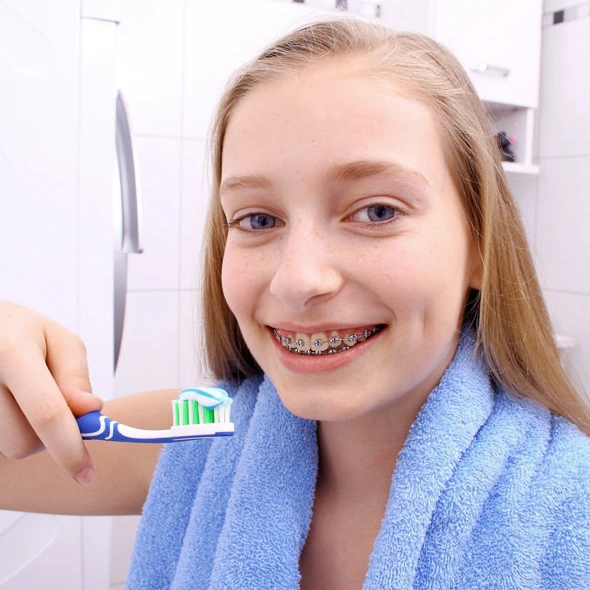
During your braces treatment, you’ll need to adjust your brushing routine to ensure your teeth and braces stay clean and healthy.
Here are some essential tips to keep in mind when brushing with braces:
- Use fluoride toothpaste and a soft-bristled toothbrush with rounded bristles. Since braces can wear out a toothbrush quickly, replace it as soon as you notice any wear and tear.
- Brush around every part of your braces and all surfaces of your teeth—fronts, backs, and sides. Don’t forget to brush your tongue and the roof of your mouth.
- A good indicator that you’re brushing correctly is when your braces look clean and shiny, and you can clearly see the edges of the brackets.
- Be gentle but thorough when brushing your gums.
- Rinse your mouth thoroughly after brushing.
- Finally, inspect your teeth and braces in a well-lit mirror to ensure they’re spotless. Use this time to check for any loose or broken brackets. If you find an issue, contact [office name] to see if a repair is needed.

How to Floss
Our friendly orthodontic team in El Cajon, CA, is here to help you learn the proper flossing techniques when you choose Dr. Rogers for your orthodontic care.
These tips for flossing with braces will make the process easier, and you'll become a pro in no time:
- Floss every night before going to bed, so you won’t feel rushed and can do it properly.
- Using a floss threader can be helpful. This reusable tool lets you easily guide dental floss underneath your archwire.
- Make sure to clean carefully along and under your gumlines to remove plaque and food particles.
- While flossing with braces may seem challenging at first, it’s very important for your oral health. With a little practice, it will become quicker and easier.
By incorporating flossing into your daily routine, you'll maintain healthy teeth and gums throughout your orthodontic treatment with Dr. Rogers.
Other Hygiene Helpers
In addition to the regular dental hygiene tools we’re all familiar with, such as toothbrushes and floss, Dr. Rogers may recommend a few additional products that make brushing with braces a little easier to manage.
- Interproximal Brush: This small tool slides under your archwire and helps more thoroughly remove plaque and food particles around your brackets, ensuring a deeper clean.
- Prescription Fluoride Toothpaste or Fluoride Rinse: If prescribed by Dr. Rogers, using fluoride toothpaste or rinse once a day as part of your cleaning routine can help strengthen your enamel and protect your teeth from cavities. For optimal results, use it with your interproximal brush to deliver maximum fluoride protection.
- Power Toothbrush or Waterpik: Devices like the Oral-B Professional Series toothbrush or a Waterpik can help make brushing easier and more effective. These tools are designed to clean your teeth more efficiently, especially when you have braces, making it easier to maintain excellent oral hygiene.
By using these helpful tools, you can ensure that your braces stay clean and that your teeth remain healthy throughout your treatment with Dr. Rogers.
Problems Caused by Poor Oral Hygiene
Good dental hygiene is crucial during orthodontic treatment. Without proper care, plaque and food particles can build up around your braces, increasing the risk of dental issues.
Plaque contains bacteria that react with sugars and starches in food, producing acids that can damage your tooth enamel. This can result in white spots, cavities, and gum disease if not addressed through regular brushing and flossing.
- If plaque accumulates around your braces, it can lead to decalcification, resulting in permanent white spots or lines on your teeth. These marks will remain for life and cannot be removed.
- Periodontal disease, caused by plaque buildup, develops in three stages. The first stage is gingivitis, where plaque irritates the gums, causing them to become swollen or puffy. The gums may also bleed when brushing or flossing.
- If left untreated, plaque can harden into tartar. As tartar accumulates, pockets or gaps may form between your gums and teeth, allowing even more tartar to build up. This stage is called periodontitis.
- In advanced periodontitis, bacteria within these pockets attack and destroy the bone supporting your teeth, leading to tooth loosening or even loss if not properly treated.
Prevent Gum Disease
Early gum disease can be reversed with professional care and diligent home hygiene. However, if left untreated, it can progress and become more severe.
Since gum disease is often painless in its early stages, it's important to watch for warning signs such as bleeding, swollen, or puffy gums. Be sure to follow Dr. Rogers' and the team’s recommendations for proper oral hygiene to help prevent these issues.