The Race to a Straighter Smile: Does Invisalign Really Outpace Braces?


The quest for a straighter smile often pits two popular orthodontic treatments against each other: traditional braces and the virtually invisible Invisalign aligners. For many, the allure of discreet treatment with Invisalign is strong. Still, a crucial question often arises: Does this modern approach offer a faster route to a perfectly aligned bite? While Invisalign boasts several advantages, the answer to whether it works faster than braces isn’t a simple yes or no. It’s a nuanced comparison that depends on various factors specific to each individual’s orthodontic needs.
Understanding How Each Treatment Works
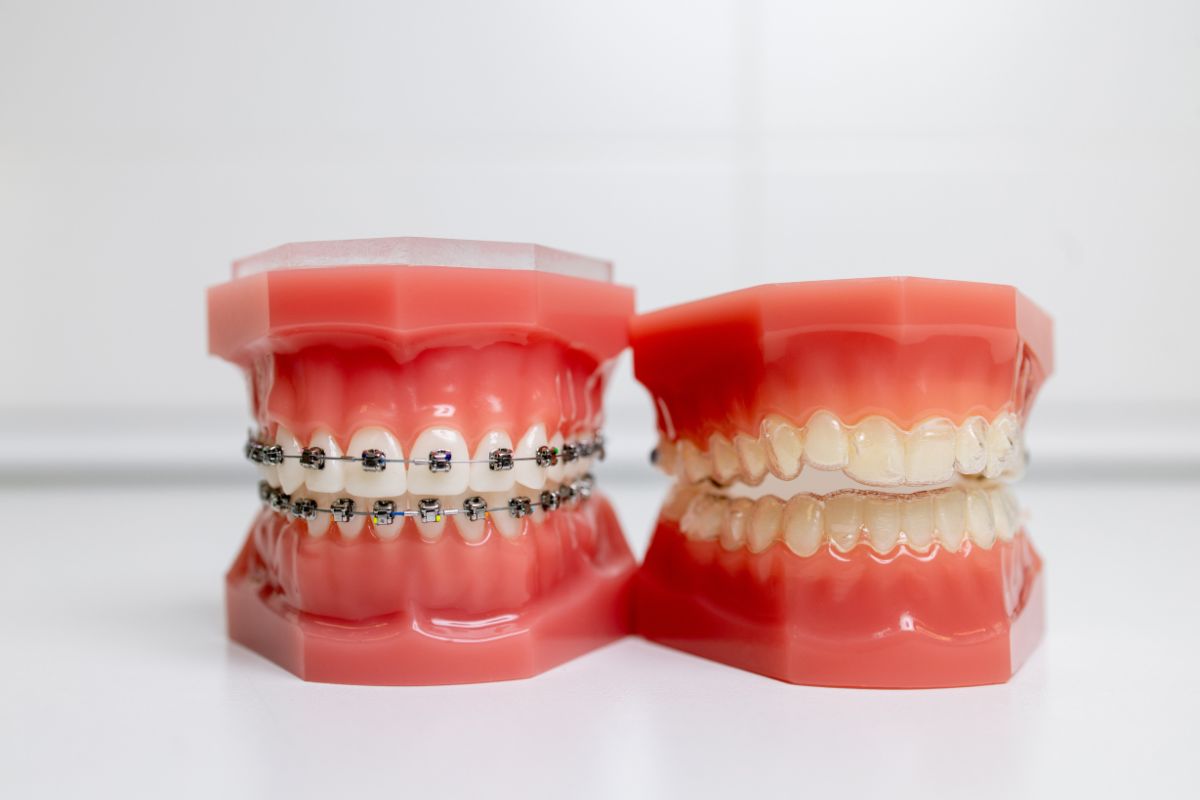
To understand the speed of each treatment, it’s essential to grasp how they work. Traditional braces utilize metal brackets bonded to the teeth and connected by wires. An orthodontist periodically adjusts these wires, applying continuous pressure to shift the teeth into the desired positions gradually. Conversely, Invisalign employs a series of custom-made, clear plastic aligners that fit snugly over the teeth. Each set of aligners is worn for a week or two, gradually moving the teeth in small increments before the patient switches to the next set in the sequence.
Does Invisalign Work Faster than Braces?
The perception that Invisalign works faster than braces isn’t always accurate, as treatment speed heavily depends on the complexity of the orthodontic case. For mild to moderate alignment issues, Invisalign can sometimes achieve results in a comparable or slightly faster timeframe than traditional braces due to its precise planning. However, for more complex bite problems or significant tooth movements, traditional braces often offer more predictable and potentially quicker results. Patient compliance is also a critical factor for Invisalign’s speed, as consistent wear is essential, unlike the fixed nature of braces. Ultimately, the fastest and most effective treatment depends on an individual’s specific needs, best determined through consultation with an orthodontist.
The Perception of Speed vs. Reality
So, where does the perception of speed come from with Invisalign? Often, it’s linked to the treatment’s less visually obtrusive nature. Patients might feel like progress is happening more quickly because they see their natural teeth more clearly throughout the process, unlike the constant presence of metal wires and brackets. However, this perception doesn’t always translate to a shorter treatment time.
Case Complexity: The Primary Driver of Treatment Time
In reality, the complexity of the orthodontic case is the most significant determinant of treatment duration, regardless of whether braces or Invisalign are used. For mild to moderate alignment issues, such as minor crowding or spacing, Invisalign can often achieve results in a timeframe comparable to, and sometimes even slightly faster than, traditional braces. Invisalign’s precise, computer-aided planning allows for efficient and targeted tooth movement in these simpler cases.
Invisalign’s Potential Speed Advantage (for Simpler Cases)
However, for more complex malocclusions involving significant bite discrepancies, rotations, or vertical issues, traditional braces often retain an edge regarding predictability and the ability to exert more forceful and intricate movements. Braces’ wires and brackets offer a more direct and powerful mechanism for addressing these complex problems, potentially leading to a more efficient resolution in the long run.
When Braces Might Offer a Faster Solution
Furthermore, patient compliance plays a crucial role in the success and speed of Invisalign treatment. Because the aligners are removable, their effectiveness hinges on the patient wearing them for the recommended 20-22 hours daily. Inconsistent wear can significantly prolong the treatment duration and compromise the outcome. The appliances are fixed with traditional braces, ensuring continuous force application regardless of patient behavior.
The Crucial Role of Patient Compliance in Invisalign
Another factor to consider is the type of tooth movement required. While Invisalign technology has advanced significantly, specific complex movements, such as significant tooth rotations or vertical adjustments, can sometimes be achieved more predictably and efficiently with traditional braces. Orthodontists have greater control over individual tooth movement with brackets and wires.
The Impact of the Type of Tooth Movement: A Summary of Speed Factors
- Invisalign may be faster for: Mild to moderate alignment issues, cases with excellent patient compliance, and primarily straightforward tooth movements.
- Traditional braces may be faster for: Complex orthodontic cases, situations requiring consistent force, and specific, intricate tooth movements.
Beyond Speed: Other Important Considerations
Ultimately, deciding whether Invisalign or braces will be faster for a specific individual is best made in consultation with a qualified orthodontist. They will conduct a thorough examination, assess the case’s complexity, and discuss the pros and cons of each treatment option, including the estimated timeframe for achieving the desired results. It’s crucial to remember that speed shouldn’t be the sole deciding factor. The effectiveness of the treatment in achieving a healthy and functional bite, the aesthetic preferences of the patient, and the overall cost are also important considerations.
The Verdict: Consult Your Orthodontist
In conclusion, while Invisalign offers a discreet and often convenient alternative to traditional braces, the notion that it universally works faster is a simplification. It can indeed be comparable or even slightly quicker for some simpler cases. However, for more complex orthodontic needs, traditional braces often provide a more predictable and potentially faster route to a perfectly aligned smile. The key lies in a thorough orthodontic evaluation and an open discussion with your orthodontist to determine the most efficient and effective treatment plan for your unique situation.